
Introduction.
The buyer’s journey is a foundational part of sales. It is a series of stages that a typical consumer will go through before making a purchase. At its most basic level the buyer’s journey consist of three stages. Awareness, Consideration, and Decision.
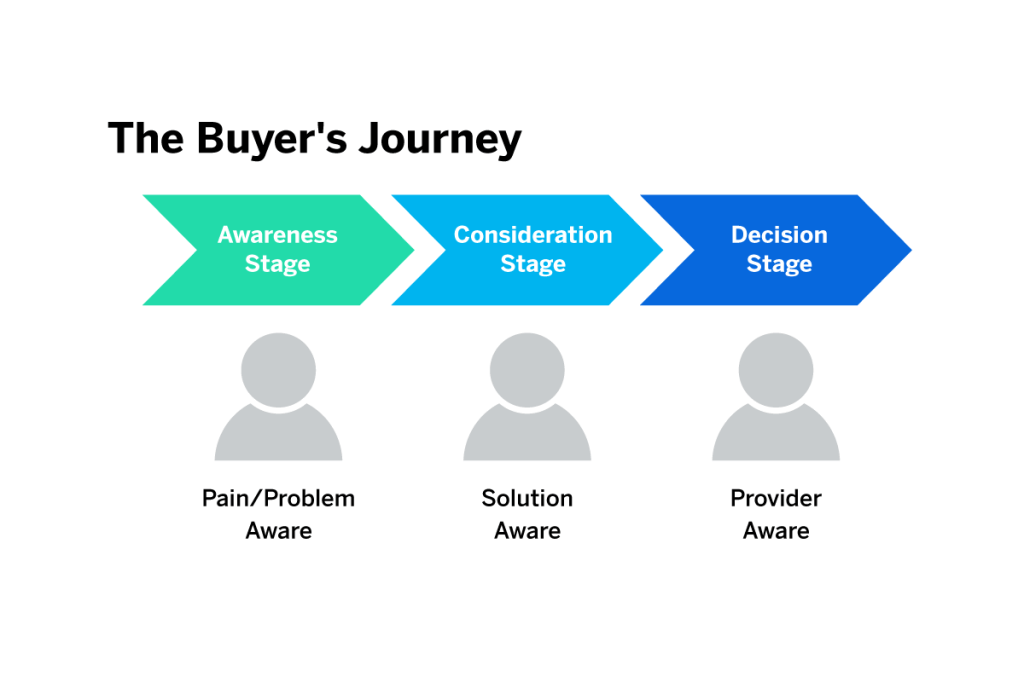
The first step is the awareness stage. This is the point when the potential customer becomes aware of a problem or need.
This discovery urges them on to stage two which is Consideration. During this stage, the consumer begins to research their problem in search of a suitable solution. At this stage they typically evaluate different options, study reviews, and determine which answer will fit their needs best.
That leads them to the final stage, Decision. This stage is pretty self-explanatory, it is when the consumer makes a decision. They take all their research into consideration and make a carful decision on which solution they’d like to try for whatever problem or need they had.
Buyer’s Journey Example.
Below is an example of a typical buyer’s journey from my own life.
Awareness.
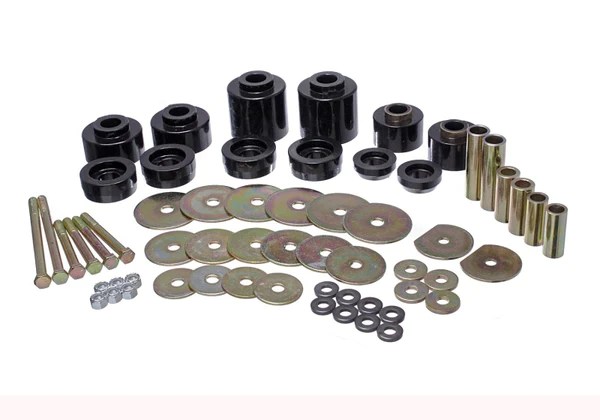
I am restoring an old pick-up truck and became aware of the problem upon inspection of my radiator core support mounts. I knew the core support needed some metal work done. I was in the process of removing it when I noticed that the rubber bushings in between where it mounted to the frame were quite dry rotted and worn out.
I then looked at the other body mount bushings and noticed they could probably stand to be replaced as well. That set me on the search for the best solution.
Consideration.
I conducted my search almost entirely online. I began by trying to pinpoint what my options were for materials. This led me to silicon, rubber, or poly.
I then went through each one searching for reviews, pros, and cons. I searched truck forums, sellers, and articles from random informational sites. I compiled the information I found and used it to make my decision.
Decision.
After hours of pouring over all the information I could find, I slowly began to determine that poly was the route I wanted to go. I then did a bit more research to determine which company made the best and most cost-effective set. After finding that out, I made my purchase.
Conclusion.
This may seem a bit overly simple, however, keeping these stages in mind and realizing how the potential customer is thinking at each stage can prove to be very useful in the sales process.
Without this knowledge, you may not be communicating or advertising to your customers at the opportune time and may therefore lose sales. That is why learning your customers buyer’s journey is so important.
Helping your customers solve their problems is your number one priority so making sure they know about your solution and that it is the best available at the correct time in their search can make the sale much easier.
 Travis McCoy
Leave a comment