
Introduction.
For the past three weeks, I have been learning the basics of sales. Learning the thought process behind the why’s and the how’s. From how customers think, to what your role is as a salesperson, to creating a lead list of potential clients. The goal was to create a mock sales lead list and cold outreach sequence for a company by the end of the month.
Week 1: The Foundation.
I started this three weeklong project knowing nothing about sales at all.
The only thing I really knew about it was that I preferred to avoid salesmen like the plague.
In my experience, they seem to always be quite persuasive and pushy, and I prefer to take my time making decisions and deciding what to do for myself.
But that little tangent aside, I decided to start my sales journey by studying the foundation of sales:
Finding someone who has a problem, figuring out what that problem is, and fixing that problem to the best of your ability.
My first lesson in learning the proper process for sales was Learning about the “Buyers Journey” (How people think when they are looking to make a purchase), as well as how to identify what the potential customers problems are.
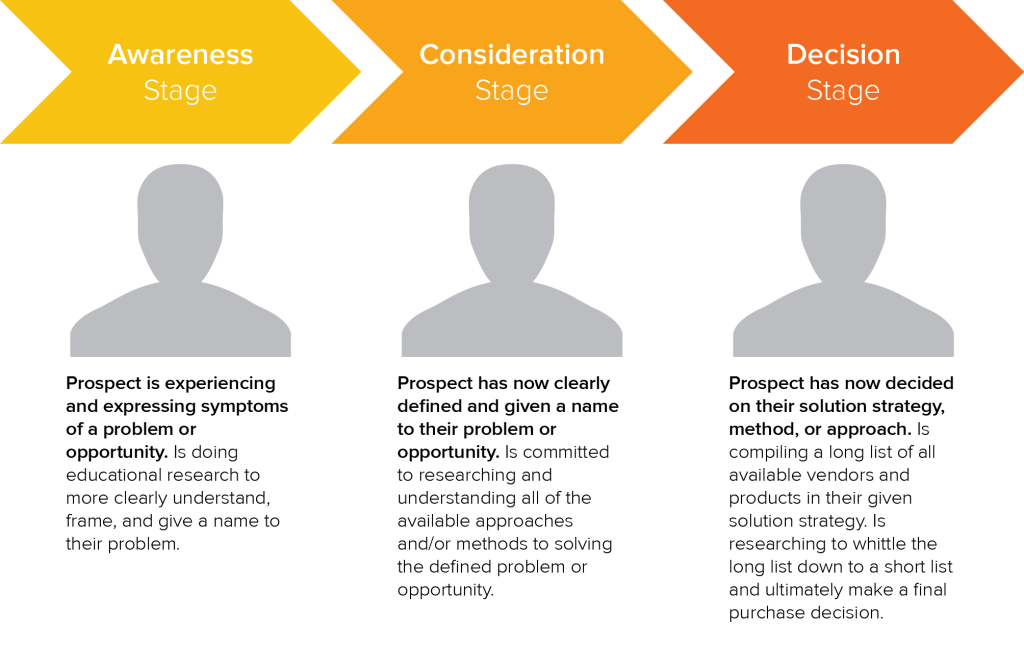
I tried to drive these principles home through a series of thought exercises. Going through my own experiences dealing with salespeople or sales tactics. (Examples of both sales done well and sales done poorly)
In this way I discovered how the sales process should be performed as well as what my own Buyer’s Journey looks like and how that applies to others. You can view these exercises below:
Week 2: Problems and Lead List.
For my second week, I focused on determining a problem that a group of people might have and how to reach them with a solution.
To begin, I studied what buyer personas were. Buyer Personas are worded descriptions of who your intended customers are.
There are many different ways to create one but generally they contain pertinent information about the potential customer such as their age, interests, financial standing, and other such details.
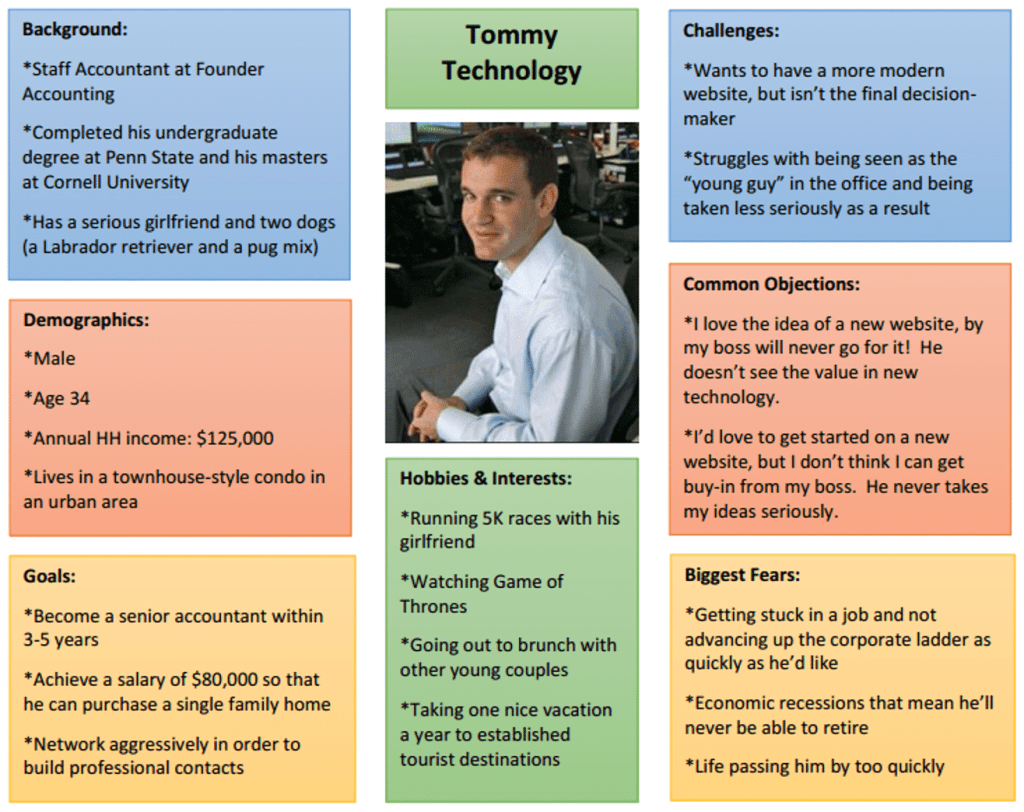
In order to demonstrate what a Buyer Persona might look like; I created a few examples of potential buyers for Apple Air pods Pro. You can check that out here:
I also began the real meat of my project. Creating a lead list and sales sequence for a real company. For this week I focused on the creation of the Lead List.
A Lead List is a collection of potential customers for a company’s sales team to reach out to. This is typically used when a company uses an outbound sales approach meaning that they are reaching out to potential customers without indication that the person is actually interested in their product. This process is known as outbound sales, or you may hear it referred to as cold calling or cold emailing.
You find potential clients by compiling a buyer persona for your company and then you begin researching to find people or businesses who match your buyer persona or who you think would be interested in whatever you are selling. There are many programs that companies use in order to speed up this process.
However, because I was only interested in learning the idea behind it and the basics, I decided to opt for a method that required a little more leg work.
I decided that I wanted to use “Fresh Books” an online accounting and financial management software company that specializes in helping very small businesses and solo entrepreneurs keep their finances in order as the company I would create my lead list and sale’s sequence for.
I chose them because it is a service that I believe my own boss could benefit from so I understood the need for it. At first, I wasn’t exactly sure how broadly to aim for my target pool of potential clients but in the end, I decided to narrow it down to only small janitorial companies (again, because I am a bit more familiar with the industry).
I then used a combination of LinkedIn, LeadIQ, Google, and Google Sheets to create a simple potential Lead List for Fresh Books. You can read a full rundown of how I used those same programs to do the same thing earlier this year for a slightly different purpose, you can see that here.
If you’d like to see the completed lead list, you can check that out here.
Week 3: Sales Sequence
For my third and final week of this process, I took on the challenge of creating a sales sequence for Fresh Books.
A sales sequence is your plan of attack for the outreach portion of the sales journey.
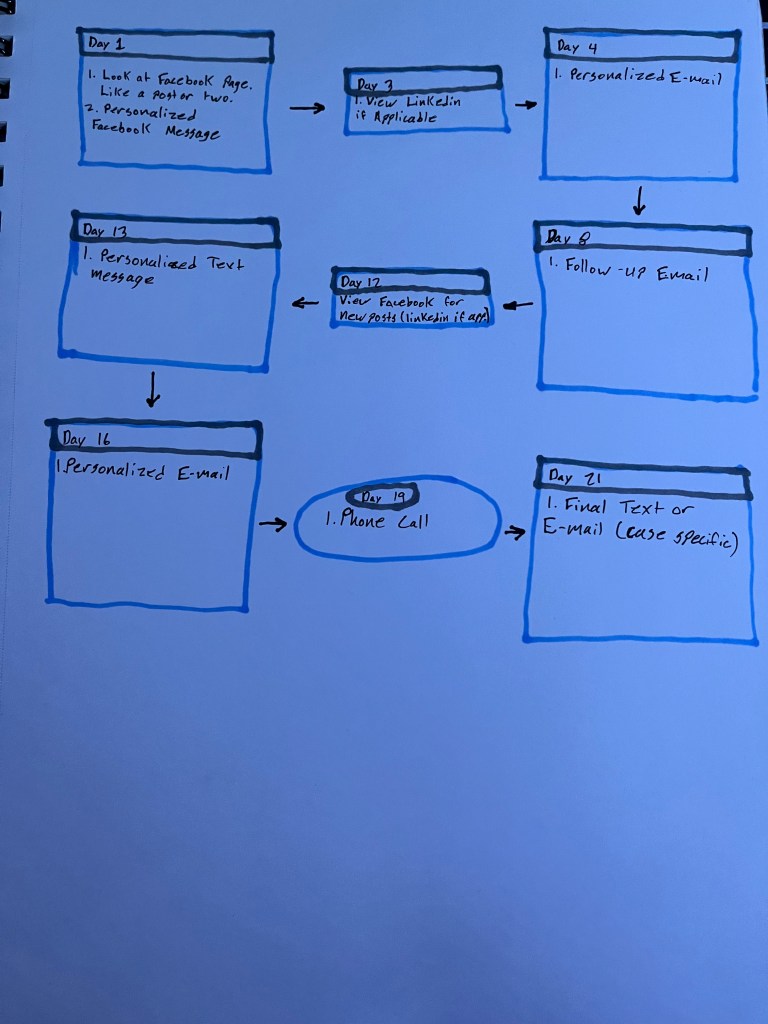
Not only did I come up with a 21 day outreach plan which included emails, DMs, phone calls, and other small touchpoints, but I also went through and created drafts for what those messages and emails might look like.
If you’d like to learn a little bit more about the process, you can check out my blog post covering the process which is linked below:
 Travis McCoy
Leave a comment